

Antinuclear Antibody Seropositivity and Its Association With Transforming Growth Factor β1 and the Dynamics of Tumor-Associated Antigens in Prostate Cancer
DOI:
https://doi.org/10.14740/cmmr117Keywords:
Antinuclear antibodies, PSA, PSMA, TGF-β1, Prostate cancerAbstract
Background: The clinical significance of antinuclear antibodies (ANAs) in prostate cancer (PCa) remains unclear. This study aimed to determine the prevalence and potential clinical implications of ANA positivity in PCa patients and its association with transforming growth factor β1 (TGF-β1) and tumor-associated antigens.
Methods: ANAs were detected by indirect immunofluorescence in serum samples from 26 PCa patients. Serum prostate-specific antigen (PSA) was measured using an Immulite autoanalyzer. Immunohistochemistry was performed to assess PSA, prostate-specific membrane antigen (PSMA), CD34, and Ki-67 expression in PCa tissues. Serum TGF-β1 levels were quantified by enzyme-linked immunosorbent assay (ELISA).
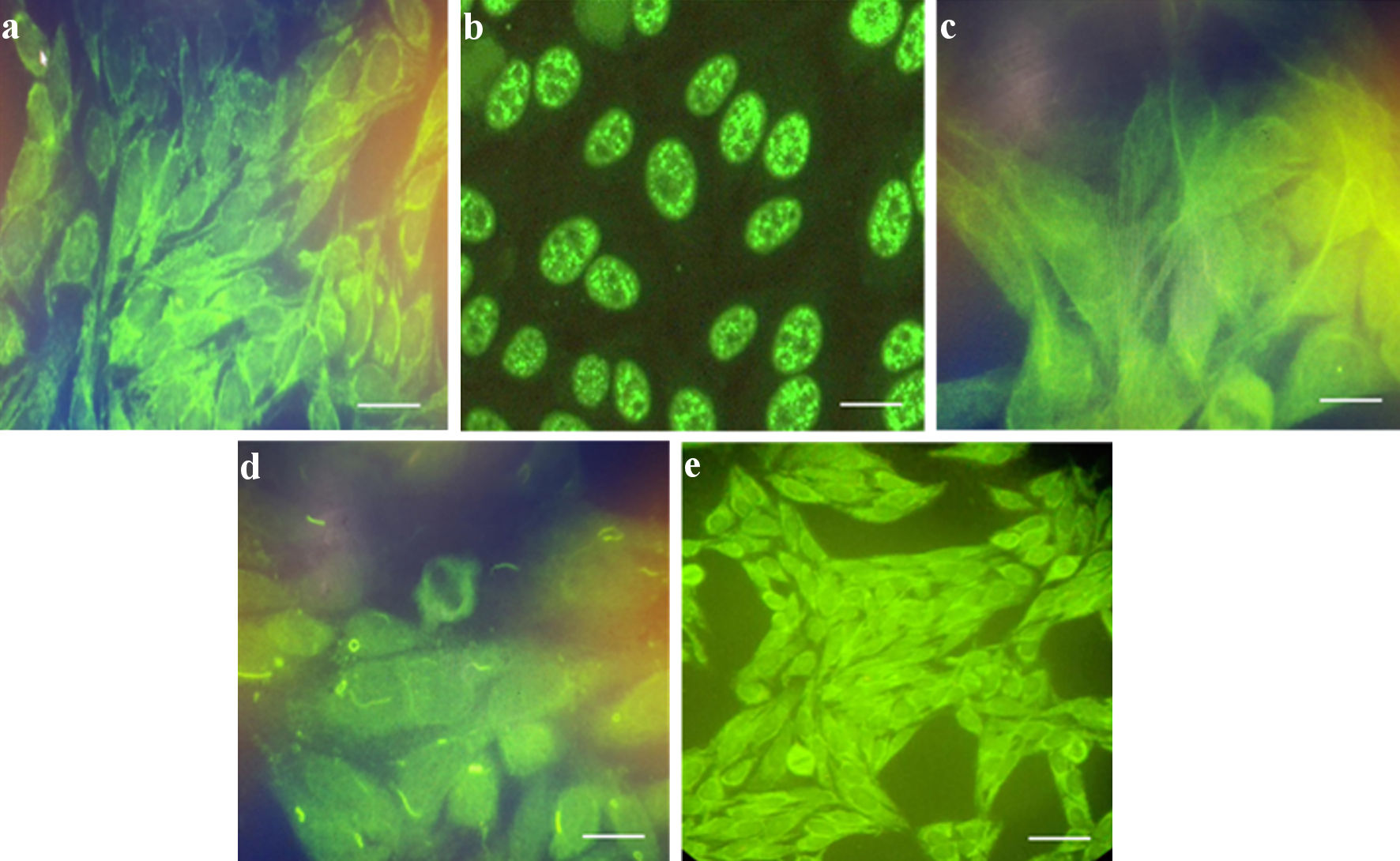
Results: ANA positivity was observed in 30.8% (8/26) of PCa patients. ANA-positive and ANA-negative groups were similar in age. The most common ANA pattern was mixed, while unique cytoplasmic, speckled, cytoskeletal, and rods-and-rings patterns appeared in individual cases. ANA positivity was more frequent in patients with high Gleason scores (62.5% vs. 37.5%; P = 0.016) and high PSA levels (> 100 ng/mL). Median serum PSA was significantly higher in ANA-positive than ANA-negative patients (176 ng/mL vs. 51 ng/mL; P = 0.0046). Immunostaining for PSA, PSMA, and CD34 was significantly stronger in ANA-positive tissues (P = 0.035, P = 0.035, and P = 0.033, respectively), while Ki-67 expression showed no difference. Conversely, serum TGF-β1 levels were higher in ANA-negative patients (16.59 ng/mL vs. 11.41 ng/mL; P = 0.04).
Conclusions: Our preliminary findings suggest that ANA positivity in PCa may be associated with higher PSA levels, increased tumor antigen expression, lower serum TGF-β1 levels, and more aggressive disease features. These observations raise the possibility that ANA positivity may be associated with markers of PCa aggressiveness; however, these findings should be considered exploratory and require confirmation in larger, independent cohorts before any conclusions can be drawn regarding the potential role of ANA as a biomarker of aggressive PCa.
Published
Issue
Section
License
Copyright (c) 2026 The authors

This work is licensed under a Creative Commons Attribution 4.0 International License.